
More Than Metal Spinning: Full Capabilities
More Than Metal Spinning: Full Capabilities Not Sure What You Need? Request a Quote

At Toledo Metal Spinning, we have the ability to roll and weld custom cylinders and can complete every task in house.
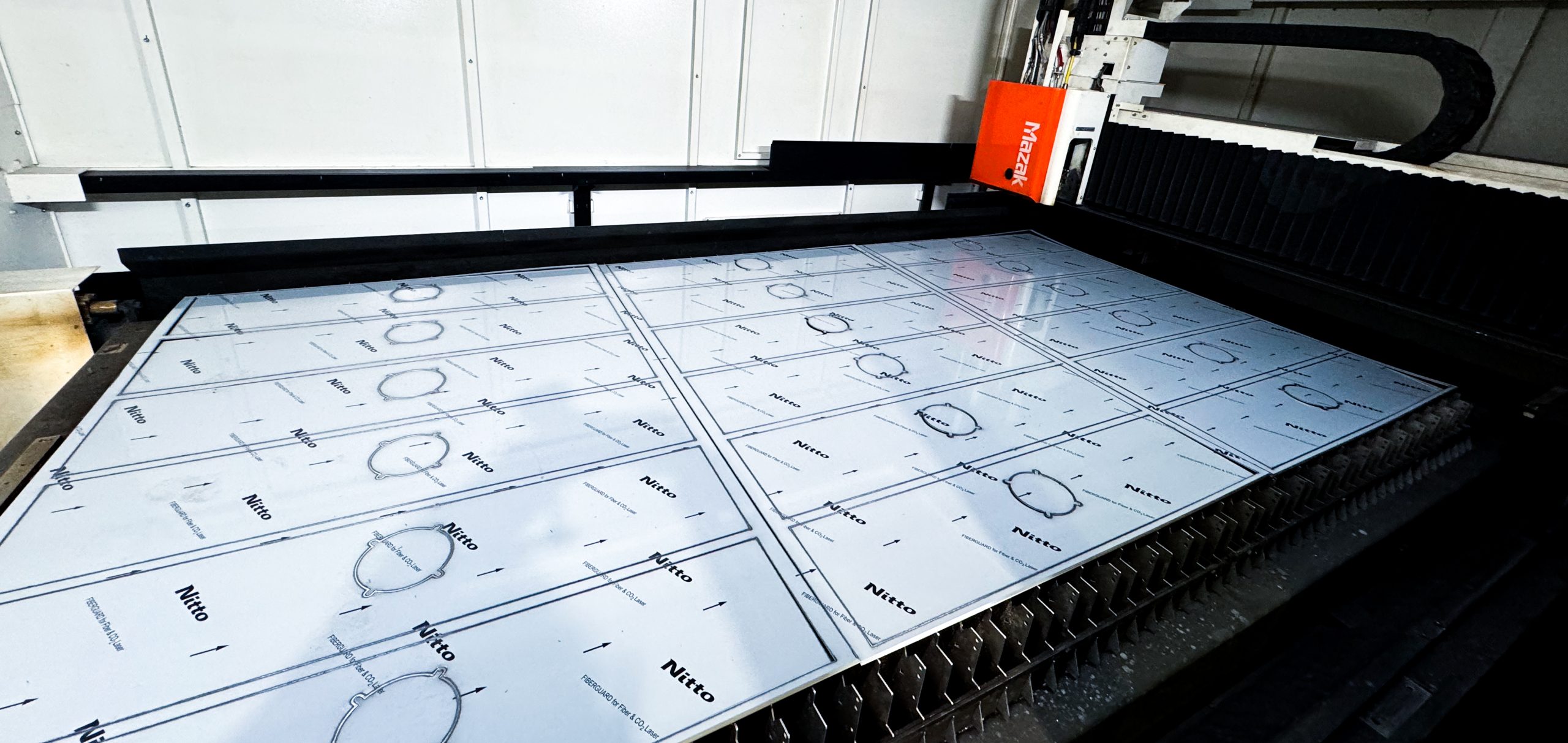
Our process begins with laser cutting a blank sheet of metal out of the material of your choosing. We typically use stainless steel or aluminum. Cylinders are created by rolling flat sheets into a round shape and then sealing with a seam weld. Welds are produced by our TIG welding systems.
Once the parts are rolled in the Davi roller, we take them to our tabbing station to weld tabs to the ends of the cylinder. These tabs prevent “blow through” on the cylinder’s ends. The tabs are welded starting at one end of the cylinder, all the way down the length of the cylinder, through the second tab. The Jetline TIG welding system creates a smooth, strong weld.
Once the weld is complete, we planish the weld, meaning that the weld will be nearly flush with the cylinder. The tabs are then cut off, leaving nice and even ends.
The cylinder is now complete, with the opportunity to add any customizable features, such as ribbed or custom formed ends, fittings, side holes, and weld flanged options. Cylinders can be customized with cut outs done by our laser during the initial laser-cutting step. Our laser will cut whichever shape necessary into the blank before being sent to the Davi roller.
Not sure which option is best for you? Click here for more information about our flanging process.


More Than Metal Spinning: Full Capabilities Not Sure What You Need? Request a Quote
Deep Drawing: Variables Affecting Metal Flow Not Sure What You Need? Request a Quote
Rolled and Welded Cylinder Fabrication: A Guide for Engineers and Buyers At Toledo Metal Spinning Company, we manufacture custom rolled and welded cylinders for a wide range of industrial applications. Our capabilities support customers in industries including aerospace, agriculture, automotive, building and construction, HVAC, and general manufacturing. Rolled and welded cylinder fabrication provides flexibility in
What is the Trimming Process and How is it Performed? Trimming is a process used to remove excess material to achieve a desired shape, size, and finish, while removing burrs and smooths out sharp edges. To trim a part, it is put on a lathe and processed by a highly skilled metal spinner, or a
The Metal Finishing and Polishing Process The polishing process is a secondary metal fabrication process that is done to create a smooth and shiny surface by utilizing abrasives or chemical treatment, and can be done by hand or robotic automation. The purpose of adding a finish or polish is to improve the appearance by creating
Metal Fabrication: What is the Beading and Edge Rolling Process? Beading and edge rolling are the metal forming processes of adding a radius, raised edge, or indented ridge along the edge of a piece. This process is done to increase stability and durability of the part, and can also increase its functionality by allowing for
The Benefits of One-piece Constructions At Toledo Metal Spinning Company, we have been forming metals since 1929. With nearly a century of experience, we have mastered a wide range of processes including metal spinning, deep drawing, rolling and seam welding, laser cutting, and machining to build strong and durable high-performance parts. But what truly sets
Sheet Metal Laser Cutting 101 What is laser cutting and how does it work? The laser beam is a heat source which can melt metals rather quickly. When the concentrated beam comes into contact with the material, in this case, metal, the beam’s energy is absorbed into the metal, causing it to melt. However, the
Laser cutting produces efficient, precise cuts with smooth, uniform edges in both small and large runs on materials up to 1 in. thick. It’s no surprise that the process has become extremely popular, and manufacturers and fabricators now rely on laser cutting more than ever. Laser Cutting Basics A laser is a source of intense