
Metal Spinning Tooling 

There are two general types of tooling for metal spinning processes: wood and steel. CNC lathes are equipped with hydraulicly actuated arms that generate a tremendous amount of pressure from the material being spun to the tooling underneath it. When the material is formed to the tools, the pressure increases by a great amount. Wooden tooling is not as strong as steel, and has the possibility of breaking, or even exploding when too much pressure and strain is added. Wooden tooling is typically used with softer materials, such as aluminum and copper. Because many of our products are made from stainless steel, this is where D-2 Steel comes in very handy. It is an extremely strong and durable material that we make most of our tooling from.

Wooden Tools

Wooden tooling is less durable than steel tooling but offers a cost-effective solution for prototypes and small production runs. However, wood is prone to absorbing moisture and could deteriorate over time. Wooden tooling is commonly used with hand lathes, but with the precision and efficiency provided by CNC controlled lathes, many metal spinners have transitioned away from manual spinning. CNC technology gives spinners the opportunity to produce large production runs in a short amount of time. Most of the tooling used for CNC controlled lathes are made from steel.

Historically, hand spinning was more prevalent, and wooden tools were a fast and economical option for prototypes or one-off orders. Despite advances, wooden tooling can still be used for specific applications, such as followers that hold the part against the chuck, or trim tools. These tools help protect cutters from being damaged by direct contact with steel. Additionally, wooden trim tools are also utilized for adding finishes, where they can be used for polishing directly on the tool in certain cases.

wood hemisphere metal spinning tooling
wood metal spinning tooling

Steel Tools

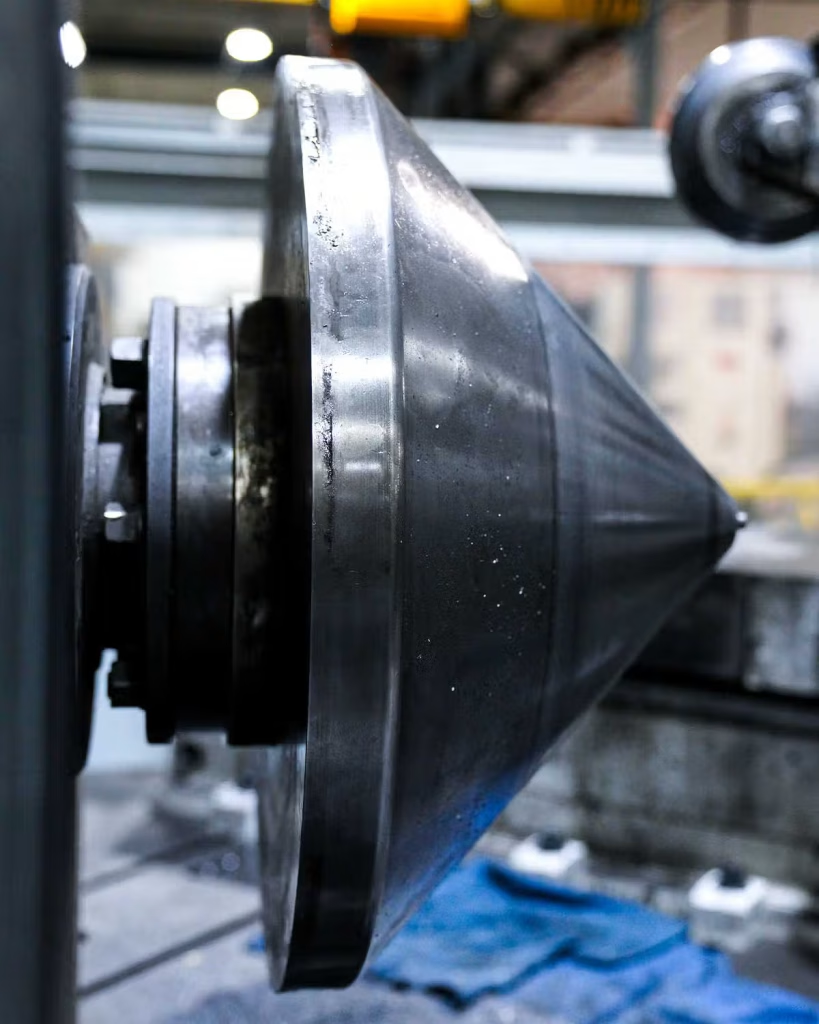
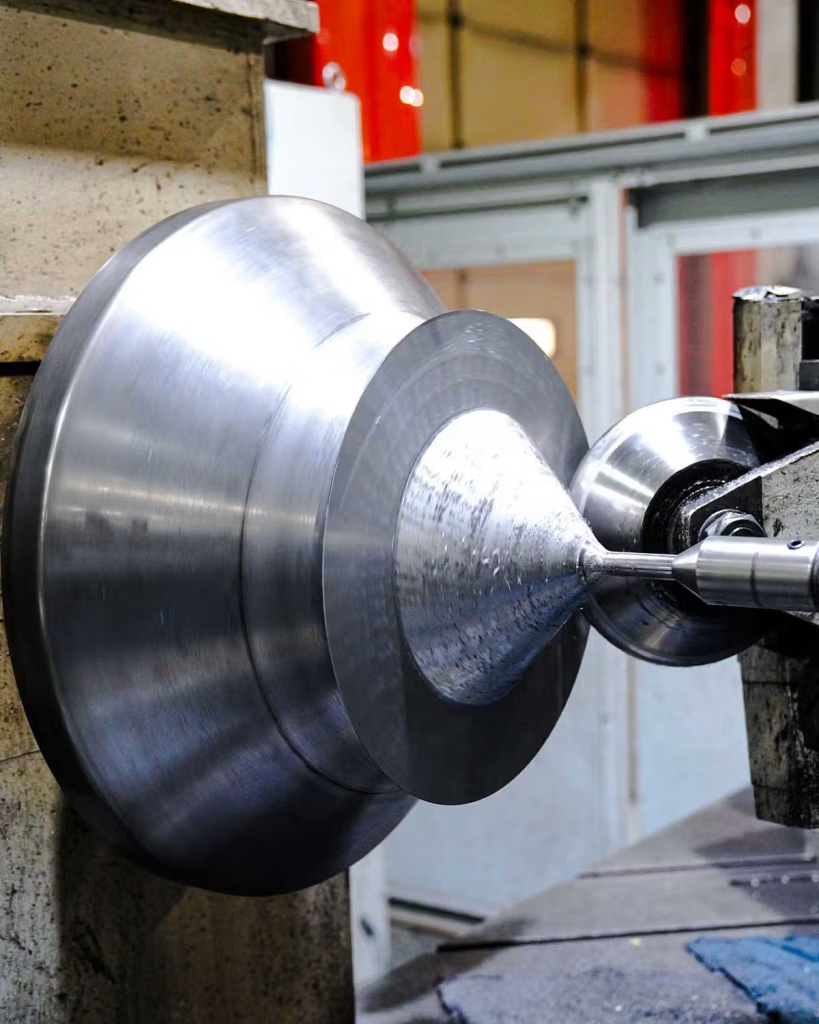
D-2 Hard Steel is commonly used for metal spinning tooling. D-2 is a specific tooling material with characteristics such as high Carbon and high Chromium with extremely high wear-resisting properties. Its high Chromium make-up gives it some corrosion-resisting properties when it is in its hardened condition. After treating the steel properly, it will not change in size, with the potential to last a lifetime.

Fabricating steel tooling is a lengthy process as machining steel is tougher than wood and may require sending for heat treatment. Heat treating steel can be an expensive process. If the tooling will not see much use, or is not in direct contact with wear surfaces, heat treatment is not always necessary. Unhardened or prehardened steel is also effective and durable for tooling in these cases. However, ultimately, the choice of material depends on the expected use of the tool.

steel cone metal spinning tooling
steel metal spinning cone with lathe

General Characteristics:

  • Extremely High Wear Resistance
  • Low Machinability
  • Low Grinding Ability
  • High Carbon Steel
  • Virtually free from size change after treatment
  • High percent of Chromium

D-2 Steel can be utilized for many different purposes including Blanking Dies, Forming Dies, Deep Draw Press Dies, Metal Spinning Tooling, and Rollers. Below are two examples of press tooling. 

deep draw press steel tooling

Related Articles

Metal Spinning for Aerospace Applications

The rise of Metal Spinning in Aerospace Applications Advanced manufacturing and metal fabrication processes play a critical role in the aerospace industry. Precision and safety are equally essential, and there is no margin for error. Metal spinning is an innovative process often chosen for the fabrication of aerospace applications, whether that be fuel tanks, rocket

Read More »

Secondary Metal Fabrication Process: Trimming

What is the Trimming Process and How is it Performed? Trimming is a process used to remove excess material to achieve a desired shape, size, and finish, while removing burrs and smooths out sharp edges. To trim a part, it is put on a lathe and processed by a highly skilled metal spinner, or a

Read More »

Benefits of the Polishing Process

The Metal Finishing and Polishing Process The polishing process is a secondary metal fabrication process that is done to create a smooth and shiny surface by utilizing abrasives or chemical treatment, and can be done by hand or robotic automation. The purpose of adding a finish or polish is to improve the appearance by creating

Read More »

Secondary Metal Fabrication Processes

Secondary Metal Fabrication Processes At TMS, our secondary metal forming processes consist of: Beading and Edge Rolling Trimming Welding Metal Finishing and Polishing Each process can be done manually or automated, depending on the part. Beading and Edge Rolling Beading is very similar to edge rolling. During the beading process, a radius is added to

Read More »

Innovation and Technology and How it Impacts Metal Spinning

How Technology and Innovation has Impacted Metal Spinning As Frank Crawshaw points out in his book Metal Spinning written in 1909, “It is believed that some quarters, particularly among metal spinners, that pressing or stamping metal can never fully take the place of spinning it. It is impossible to press or stamp some forms except as they

Read More »

Metal Spinning Tooling

Metal Spinning Tooling  There are two general types of tooling for metal spinning processes: wood and steel. CNC lathes are equipped with hydraulicly actuated arms that generate a tremendous amount of pressure from the material being spun to the tooling underneath it. When the material is formed to the tools, the pressure increases by a

Read More »

Benefits of Metal Spinning

What are the Advantages of Metal Spinning? At Toledo Metal Spinning Company, metal spinning has been at the core of who we are for nearly a century. We have been forming metals since 1929, beginning with being solely a metal spinning company. There are many different benefits to this process, which is one reason we

Read More »

Not Sure What
You Need?

Scroll to Top