
Commonly Asked Questions about Cylindrical Applications 

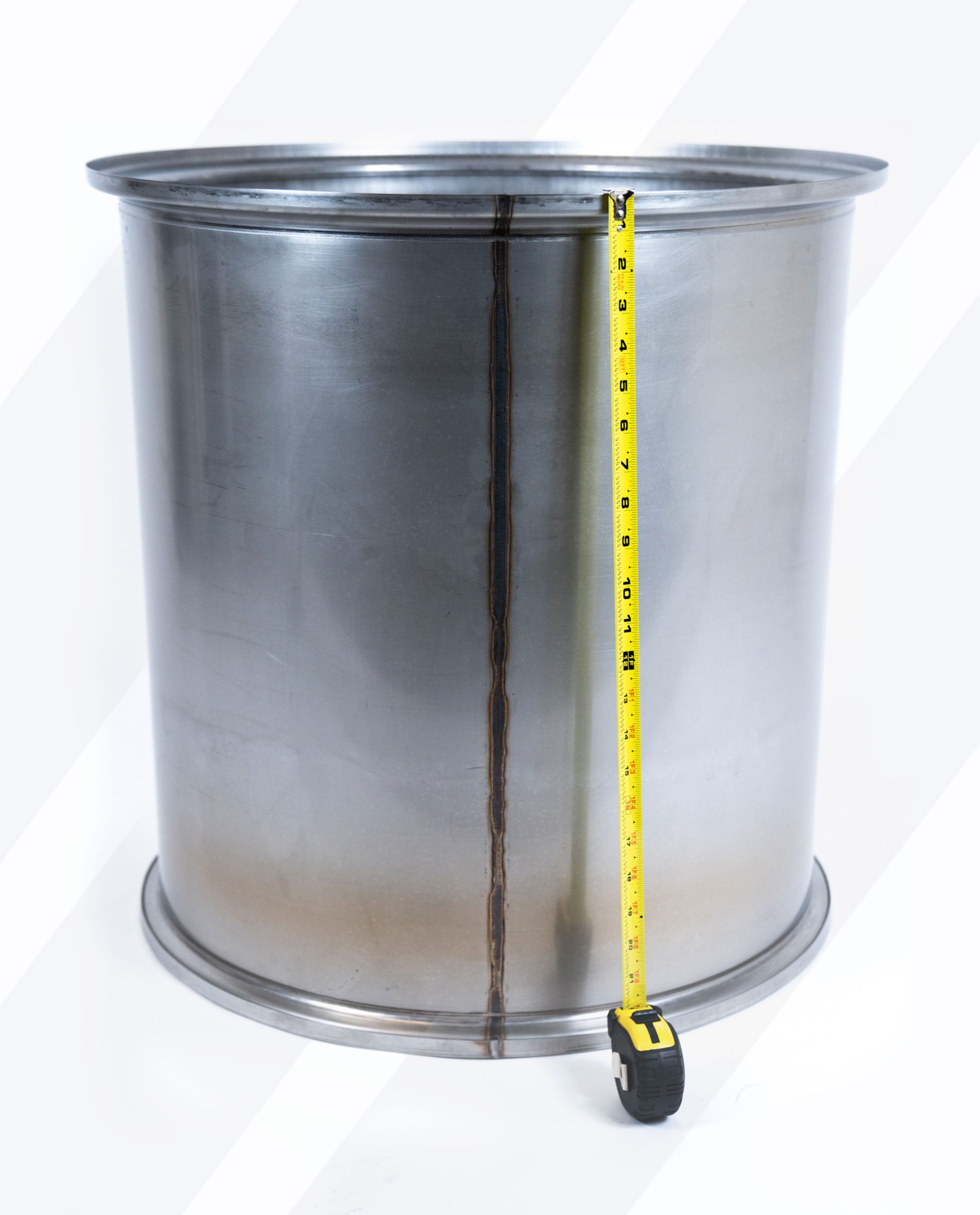
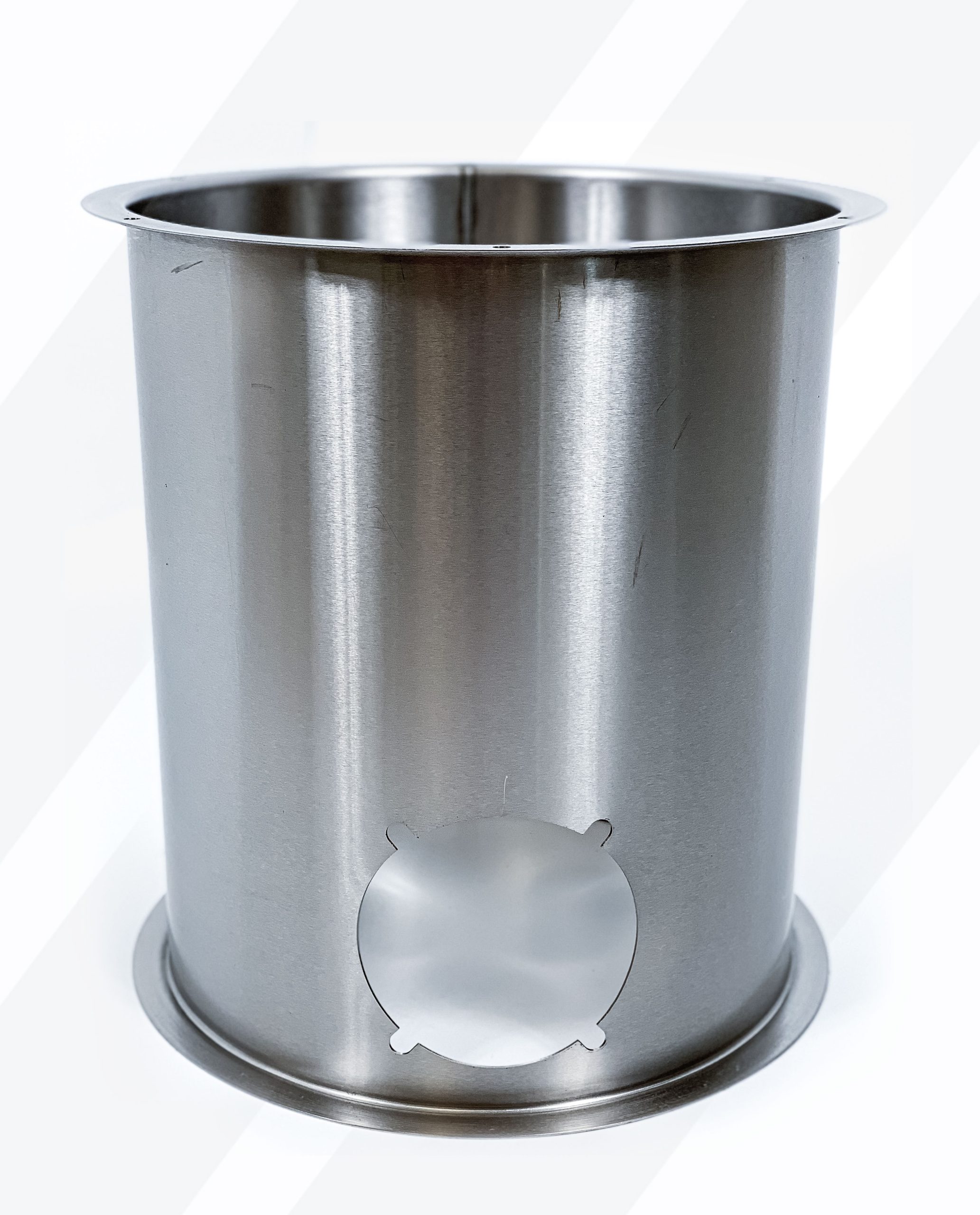
A spool is a fabricated length of tubing with clamp fittings, or flanges at both ends. A couple popular names are cylinders, extensions, tubes, spools, rings, or cylinders. These pieces are classified as spools when the flanges are on both ends.

What is a Stainless Steel Sleeve or Ring?

Stainless Steel sleeves and rings are fabricated from stainless steel cylinders with flanges added to both ends for convenience and ease of connecting and adding extensions. These parts may also be known as tubes. When multiple tubes, spools, or sleeves are connected using gaskets and tri-clamps or bolts, this allows for a free-flowing tube system, eliminating the need for any welding. Because of the clamps, these options offer the ability to be disconnected and moved more easily than welded tubing/cylinders. 

What is a ring, spool, or sleeve piece used for?

A metal ring, spool or sleeve may be used for many different applications. Some of the most popular uses would be tubing, home brewing systems, funnel extensions, food processing systems, or packaging and conveying systems. They are not always solely used as extensions! 

Custom Cylinder Configurator

A spool is given its name because of the flanges on both ends. Below is an example.

Example of Spool, Ring, Tube, Sleeve
Spool, Ring, Tube, Sleeve

What is a spool in a piping system?

In a piping system, a pipe spool is one of the most commonly used terms. Pipe spools are typically fabricated components of a piping system. The three main components are the piping itself, the flanges, and the fittings.

As mentioned in a previous article, flanges are the pieces of the cylindrical piping component that allow for connections or extensions. Without flanges, the pipes would not have a way of holding together. Flanges allow for the piping to be strong and durable, while providing connections. Adding a fitting allows for the flow of material in different directions. 

What is the difference between a pipe and a spool?

One main difference is that piping is continuous, while a spool has the ability to be moved, or taken apart easily. They each may vary in size, from small to very large. At Toledo Metal Spinning, we have the ability to form our spools to a diameter of 48 inches, and weigh up to 50 pounds.

Flanges are a crucial aspect to the durability and versatility of spool pieces. Follow along with how we add these to our cylindrical components here!

Contact us today for your cylinder needs!

Related Articles

Secondary Metal Fabrication Process: Trimming

What is the Trimming Process and How is it Performed? Trimming is a process used to remove excess material to achieve a desired shape, size, and finish, while removing burrs and smooths out sharp edges. To trim a part, it is put on a lathe and processed by a highly skilled metal spinner, or a

Read More »

Benefits of the Polishing Process

The Metal Finishing and Polishing Process The polishing process is a secondary metal fabrication process that is done to create a smooth and shiny surface by utilizing abrasives or chemical treatment, and can be done by hand or robotic automation. The purpose of adding a finish or polish is to improve the appearance by creating

Read More »

Secondary Metal Fabrication Processes

Secondary Metal Fabrication Processes At TMS, our secondary metal forming processes consist of: Beading and Edge Rolling Trimming Welding Metal Finishing and Polishing Each process can be done manually or automated, depending on the part. Beading and Edge Rolling Beading is very similar to edge rolling. During the beading process, a radius is added to

Read More »

Laser Cutting 101

Laser Cutting 101 What is laser cutting and how does it work? The laser beam is a heat source which can melt metals rather quickly. When the concentrated beam comes into contact with the material, in this case, metal, the beam’s energy is absorbed into the metal, causing it to melt. However, the laser beam

Read More »

Maximizing Edge Quality in Laser Cutting

Laser cutting produces efficient, precise cuts with smooth, uniform edges in both small and large runs on materials up to 1 in. thick. It’s no surprise that the process has become extremely popular, and manufacturers and fabricators now rely on laser cutting more than ever. Laser Cutting Basics A laser is a source of intense

Read More »

The Rolling Process

Cylinders – The Forming Process Custom cylinders are made through a process that begins by putting a flat sheet of material into the laser and programming it to cut rectangles out of various materials to specific sizes. If the cylinder has any customizations or features including custom holes, windows or other shapes, these are cut

Read More »

What is Weld Distortion?

What is Weld Distortion? Weld Distortion is the deformation or misalignment of metal components caused by the expansion and contraction of the weld metal and base metal during welding process. This occurs accidentally, and there are many techniques to avoid distorting the metal throughout the welding process. Weld Distortion occurs when an incorrect amount of

Read More »

Not Sure What
You Need?

Scroll to Top