Why In-House Tooling Matters When Choosing a Metal Spinning and Deep Draw Manufacturer
Before an application can be deep drawn or spun, engineers and machinists need to build the tooling. This typically includes a punch and die, or mandrel and chuck. This process is commonly outsourced by manufacturers, adding a significant amount to production lead time.
At Toledo Metal Spinning, tool design and fabrication is done in-house, in the same facility as the deep draw and spin equipment the tooling supports. This shortens the distance between a customer’s print and a finished part, and it gives our engineers and machinists direct control over the tool design.
Our tool design and machining team is built on more than 35 years of hands-on experience, and engineers trained on current CAD and CNC design software and methodologies. Experience on the shop floor makes a difference when it comes time for production runs.
In-House tooling Design and Machining Capabilities
Keeping tool design and machining in-house removes several steps that might typically slow down a project when tooling is outsourced.
At TMS, design revisions are handled directly by the team building the tool, without routing through a separate toolmaker. If a tolerance needs adjusting or a print raises a question, our engineers and machinists are able to resolve it in a short matter, as they are working from the same information in the same facility.
This also affects how tooling decisions are made. For example, material selection is determined based on whether the tool will be utilized for a single production run, or repeat runs. How much precision a given part requires is determined based on the part’s volume and application, not a third party’s vendor’s schedule or standard process.
Metal Spinning Tooling
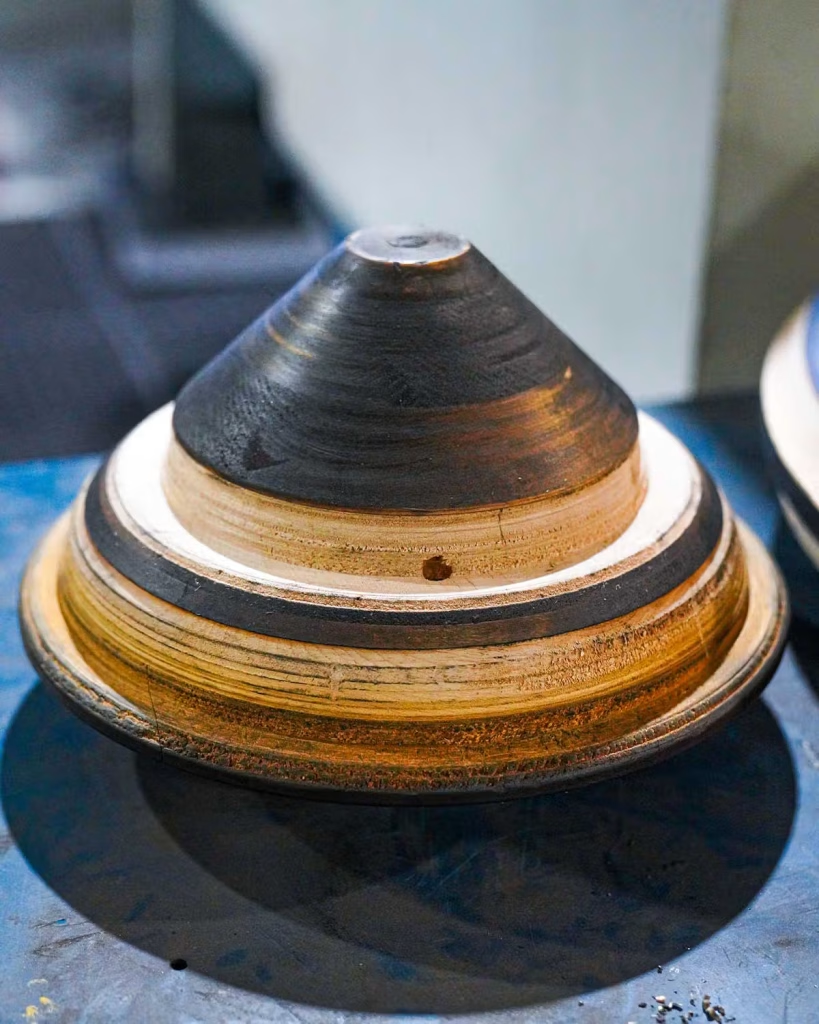
Metal spinning tooling is built from either wood, or D-2 steel. The material is determined by the part’s material, production volume, and expected tool life.
Wood tooling is a cost-effective option for prototypes, short production runs, and softer metals such as aluminum and copper. Though wood is less durable than steel and can absorb moisture over time, it is ideal for low-volume spinning work as it offers a faster, less expensive path from print to production.
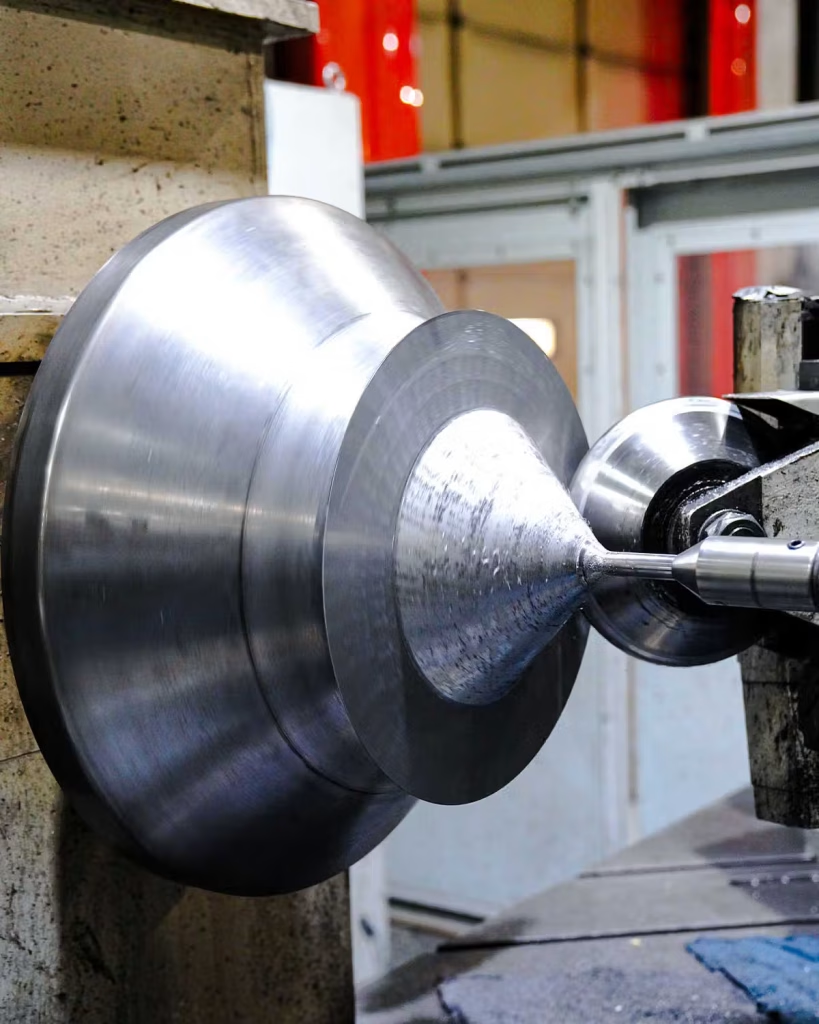
D-2 steel is used for higher-volume spinning production and for parts formed from stainless steel, which requires tooling that is able to withstand the pressure generated by CNC spinning equipment. D-2 is a high-carbon, high-chromium tool steel with strong wear resistance, and once properly heat treated, it holds its dimensions with minimal size change over repeated use.
Some spinning projects don’t require the full cost of heat-treated steel. Unhardened or prehardened D-2 can still perform well for tooling that sees limited use, or isn’t in direct contact with wear surfaces. This is an option that keeps costs down without sacrificing function.
For a closer look at spin tooling materials and construction, see our metal spinning tooling resource article.
Deep Draw Tooling: Built for Repeated Press Cycles
Deep draw tooling includes punches, dies, and blank holders, and is built from steel. Unlike spinning, where the tool and material interact gradually as the part rotates on a lathe, deep draw tooling must resist abrasive wear from the slow and controlled draw process. All deep draw tooling components that come in contact with the sheet metal blank will always be made from hardened steel. This is because of the steel’s wear properties, but also increases the longevity of the tooling.
Tool steel, D-2 steel, has a composition similar to stainless steel. Because of this, the stainless material from the blank might “stick” to the tool steel after heat is introduced during the forming process. This is one of the main issues that could occur while deep drawing with stainless steel. When the sticking occurs, the adhered material must be manually polished off, a time consuming process that can also mistakenly polish the tool steel, while reducing its size dimensionally. However, when the tool steel is hardened, it is much more difficult to remove the tool material through the polishing process, helping to protect the tooling dimensions and its longevity.
To combat this issue, at TMS, we apply PVD and XVD coatings, two different coating processes, to DC53 and D2 tool steels, an approach that has shown strong results. These coatings allow us to tailor the tooling surface specifically to the material being formed.
Pairing hardened steel with the right coating helps eliminate the adhesion between the tool and the stainless steel will since they do not share compositional similarities. This combination also improves impact resistance. The hardened D-2 steel helps prevent the coating from cracking under hard impact, while the tool material beneath the coating resists deformation.

